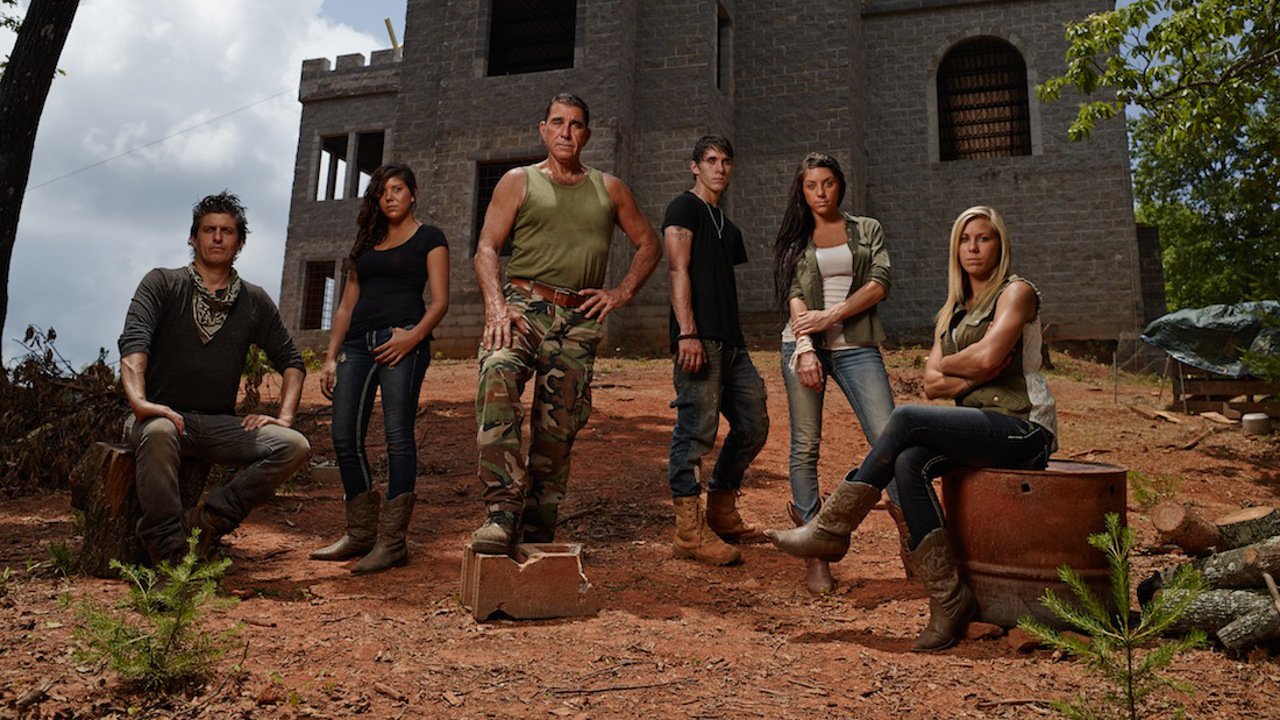
Survivalism isn't always about camo and bunkers. Sometimes, it’s about a massive stone fortress in the mountains of North Carolina. If you ever scrolled through the National Geographic Channel back in 2013, you probably stumbled upon the Doomsday Castle TV show. It wasn't your standard home renovation project. Instead of marble countertops, they were worried about EMPs and marauders.
The show followed Brent Sr. and his five adult children—Brent II, Ashley, Dawn-Marie, Michael, and Lindsey. They were trying to finish a literal medieval castle. It’s wild to think about now, but the premise was basically a family reunion centered around the end of the world as we know it. Brent Sr. was a retired infantry officer, and he didn't just want a vacation home. He wanted a legacy that could withstand a total collapse of the electrical grid.
The Reality Behind the Stone Walls
People often lump the Doomsday Castle TV show in with Doomsday Preppers, but it was a different beast. It was more of a family drama wrapped in a survivalist’s wet dream. You had these siblings who didn't really get along, forced to haul rocks and learn how to use crossbows. It was messy. Honestly, it felt more human than the hyper-polished survival shows we see today. They weren't experts. They were just people trying to figure out how to build a drawbridge without losing a finger.
The castle itself, located near Pickens, South Carolina (though often associated with the North Carolina mountains), was a legitimate construction project. It wasn't a movie set. Brent Sr. spent years and a significant amount of his own money on the structure. The "Prepper" angle gave National Geographic a hook, but the heart of the show was a father trying to reconnect with children who didn't necessarily share his apocalyptic vision.
One of the most intense parts of the series involved the "tests." Brent Sr. would stage mock attacks on the castle to see if his kids could actually defend it. It was bizarre to watch. You’d see the siblings trying to coordinate a defense strategy while bickering about who left the gate open. It highlighted a reality most preppers ignore: your gear doesn't matter if your team—your family—can't stand each other.
Why the Fortress Design?
Brent Sr. wasn't just being eccentric. He had specific reasons for choosing a medieval design for his survival retreat.
- Gravity-based defense: It’s harder to attack uphill.
- Thermal mass: Thick stone walls keep the interior cool in summer and warm in winter without a power grid.
- No reliance on high-tech: A portcullis doesn't need a computer chip to work.
In a world where most of us can't even navigate without GPS, the Doomsday Castle TV show presented a jarring alternative. It asked what happens when the "cloud" disappears and you're left with nothing but stones and wood.
The Family Dynamic: More Than Just Prepping
Let's talk about the kids. Brent II was often the one clashing most with his father. Michael and the sisters had their own struggles with the grueling labor. It wasn't all tactical training. They had to learn basic blacksmithing and how to store food for the long haul.
A lot of viewers wondered if it was scripted. While reality TV always has a "story producer" nudging things along, the physical labor was undeniably real. You can't fake the exhaustion of moving tons of stone. The tension felt authentic because, frankly, most families would fall apart if forced to build a fortress together under the constant threat of a simulated invasion.
The show only lasted one season. Why? Well, maybe the "prepper" trend peaked, or maybe the family just needed a break from the cameras. But the castle stayed. It didn't just vanish when the production trucks rolled out. It remains one of the most unique private residences in the United States, a monument to one man's very specific fears about the future.
Lessons from the Doomsday Castle
We can learn a few things from the Doomsday Castle TV show, even if we aren't planning on building a moat.
First, survival is a skill set, not a shopping list. You can buy all the freeze-dried ice cream you want, but if you can't start a fire or work with your neighbors, you're in trouble. The show hammered home the idea that community (or family) is the ultimate survival tool.
Second, the "castle" mindset is about self-sufficiency. Brent Sr. wasn't just worried about "the end." He was interested in being independent. Whether it was water filtration or off-grid power, the show explored the technical hurdles of living outside the system. It was basically a DIY guide for the paranoid.
Where Are They Now?
After the show ended, the family mostly retreated from the public eye. Brent Sr. continued to work on his property. There were rumors and listings over the years suggesting the property might be sold, but its status often fluctuated. The castle became a bit of a local legend. You can still find satellite views of the structure, sitting there like a strange relic of the 2010s survivalist boom.
It’s interesting to look back at the Doomsday Castle TV show from the perspective of 2026. We've lived through a global pandemic and seen supply chain collapses. Suddenly, the idea of having a self-contained fortress doesn't seem as "crazy" as it did in 2013. Brent Sr. might have been onto something, even if his methods were a bit theatrical.
Actionable Takeaways for Modern Preparedness
If the show inspired you, don't go out and buy a pallet of stones just yet. Start smaller.
- Audit your skills. Can you grow a tomato? Can you fix a leak? These are the "castle walls" of daily life.
- Focus on family cohesion. If things go wrong, the people you're with are your greatest asset or your biggest liability. Talk about emergency plans now, before there's a crisis.
- Think about "analog" backups. If the internet goes down for a week, do you have physical maps? Do you have a way to cook food without electricity?
- Research local geography. Brent chose his spot for a reason. Know your land. Know where the water is.
The Doomsday Castle TV show was a weird, grit-filled moment in television history. It was less about the apocalypse and more about the lengths a father would go to protect his kids—even if those kids just wanted to live a normal life. It’s a reminder that everyone’s "castle" looks a little different. For some, it’s a fortress in the mountains. For others, it’s just having six months of savings and a good relationship with the neighbors.